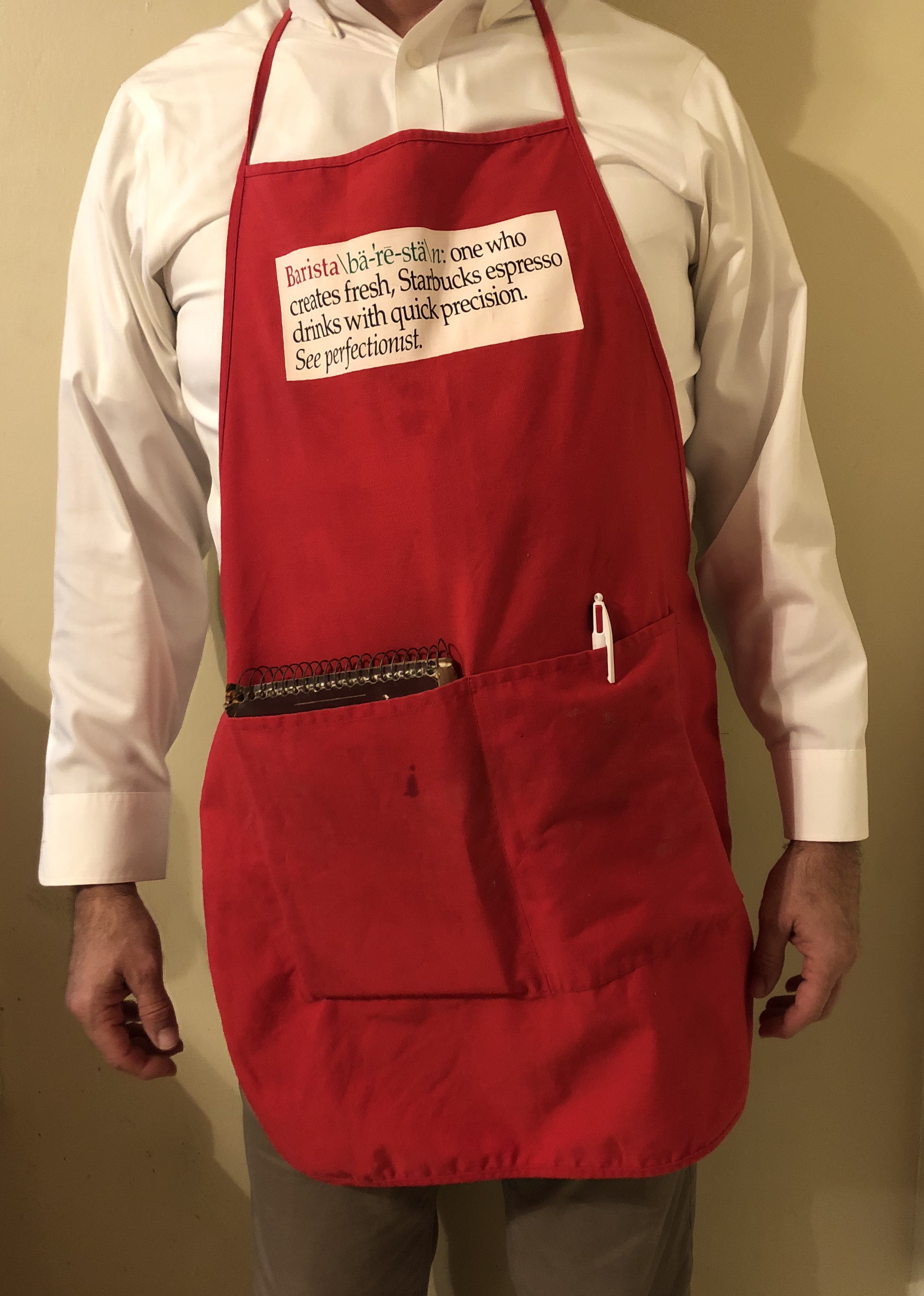
A while back I read How Starbucks Saved my Life by Michael Gates Gill. In the interest of full disclosure, I read it out of curiosity, as opposed to organic intellectual interest. In other words, I read it to see how that memoir compared to my historical fiction novel, Tripio. I may offer a full review in a later post. But for now, I will simply offer a comparison of “How” to Tripio, ingeniously using coffee as the yardstick.
How Starbucks Saved my Life = Blonde Roast
Lightly roasted coffee that’s soft, mellow and flavorful. Easy drinking on its own and delicious with milk, sugar or flavored with vanilla, caramel or hazelnut.
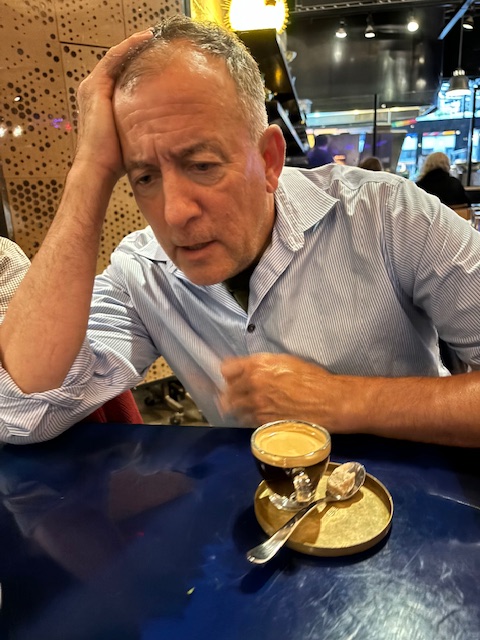
Tripio = Espresso
A complimentary blend of beans of differing origins: it is intense, deeply flavored and when brewed correctly leaves a lingering sweet aftertaste.
I am also following up on my intention to find other books about Starbucks. I was curious to see if there were other novel length works of fiction out there with a Starbucks flavor. Ha, ha. I found the list below via Christine McHugh who is a Starbucks alum and author of the soon to be released From Barista to Boardroom. I will admit that I have yet to read any of the titles below expect the aforementioned. I have pre-ordered from Barista to Boardroom after speaking with author by phone. Both Barista and How can be and probably categorized as memoirs. Below are others worth a look that I have yet to read:
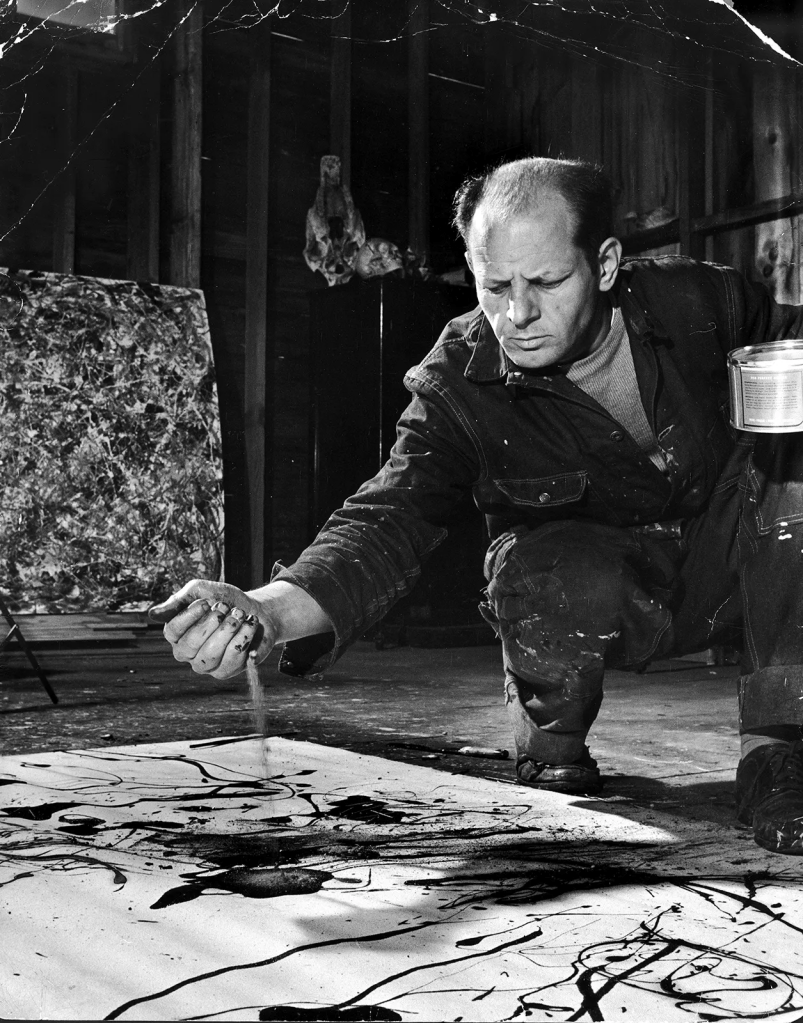
Rosenberg’s critique shifted the emphasis from the object to the struggle itself, with the finished painting being only the physical manifestation, a kind of residue, of the actual work of art, which was in the act or process of the painting’s creation.
Action Writing?
So, my novels are residue? I’ll take that. I’ll take whatever outside external definition comes with putting them out there. Because they are no longer mine.
The process that got them out there. That’s mine.
That is why the above line stayed with me. It stayed with me long enough that I had to drag my ass back to my blog and get it out of my system.
You see, I value the process of writing way more than the result. Sitting down to write is NOT my process though. In fact, as I’ve said before in this space, by the time you do that, its’ already too late.
It’s not that I don’t mind sharing my novels and novella and blog and all that with the world. The physical manifestation, the residue, is something I am quite proud of. But it is not what I value, or why I write.
So why do I write? Because I love the process. The action of it all. The journaling, the yoga, the mediation, the hours on the front porch reading, the attention and intention it brings to my mind and the thoughts I find there as I drive, garden, or chop radishes.
Action writing is more mental than the painting. I mean right now I’m in my jammies on my porch a cup of coffee on my table, the rising sun poking through the tress lining my street. But I love it. The books are for you to love. Or not.
This process, the actions that bring me here are what produces the books, are what I get out of the whole thing.
That is Jackson Pollack in the other photo. This is me.
I find myself more and more often referring to writing as a meditative practice. It much easier on me. It asks so much less of me, asks me to maintain much less. And it stops people from asking me follow up questions to which I would most likely give even more confusing replies. So it is win-win.
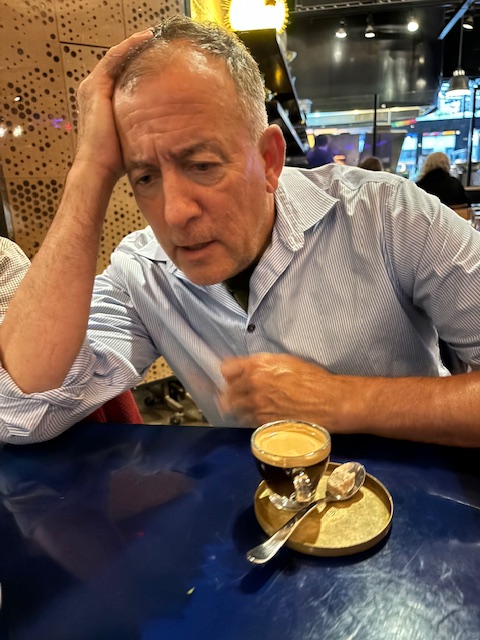
I recently finished Fabrice Midal’s book, The French Art of Not Giving Sh**. He is among other things, the founder of the Western School of Meditation. Reading a wisdom book every morning after journaling while having my doppio is cornerstone of my writing practice. I’ve read too many wisdom books to list them all here, but I like to poke around a few pages at time to find ways to help my writing practice.
My writing practice is turned inward for answers not outward. I don’t even like the words answers there. Let me try the word energy. Mental energy, flowing clear and free of attachment and expectation. There is where the novels begin, not at the keyboard of the laptop.
I go as for to say that I don’t’ write, I farm or direct mental energy. And so after reading the first page of The French Art, I had found a fellow traveler. Fabrice describes his meditative practices in a way that echoes my writing practice. So below are a few more thoughts from a mediation book on not meditating that I feel apply to my writing while not writing. It may help you understand what I’m saying when I write lines like that one. If not, at least, they may help me. Here goes:
Five thoughts not about writing for a post about writing
My aim (while meditating) is not to become wise, or calm, or patient. I have no aim, no objective, not even the idea of starting or finishing the day in particular state of mind.
I’ll buy something, so as to feel better, but once I’ve bought this product, I’ll no longer feel satisfied. I will immediately need something else. Whatever is offered next.As if it were outside of us.
Personally, I have no confidence in what I call “me.” I have confidence in the profoundness of meditation, because I have seen the fruits
Giving up on understanding everything is the only way to remain faithful to true human existence.
I still have lofty aspirations, but they steer clear of the cruelty of perfection.
Working on something of any worth requires intention and attention. Producing activity is easy. I am not sure about all you all, but I have hard time sitting still. Somewhere inside me a little voice with a big mouth is telling me that I have to be doing something. The little voice with the big mouth is usually right of course. There are always dishes to be done, bills to be paid, the device that is never far away needs a look, or the cat’s litter box needs changed. This little voice talks to me mostly at home. At work the little voice with the big mouth is usually shouted down by other voices, other mouths and other interests.
Producing activity is easy. I think that a lot of this comes about because that time of contemplation, stillness and introspection is costing somebody somewhere some money.
I also think that it has difficult to see any direct immediate benefit to sitting alone with yourself. Where is the benefit? I can’t see it right here, right now so why do it? Yet, that is why we should take the time to sit and not do, not produce, not attempt. The cost is the time, which is most valuable commodity ever. Always has been and always will be. No matter what we do, it is going to pass anyway. Sitting and contemplating isn’t a waste of time. It’s an appreciation, really.
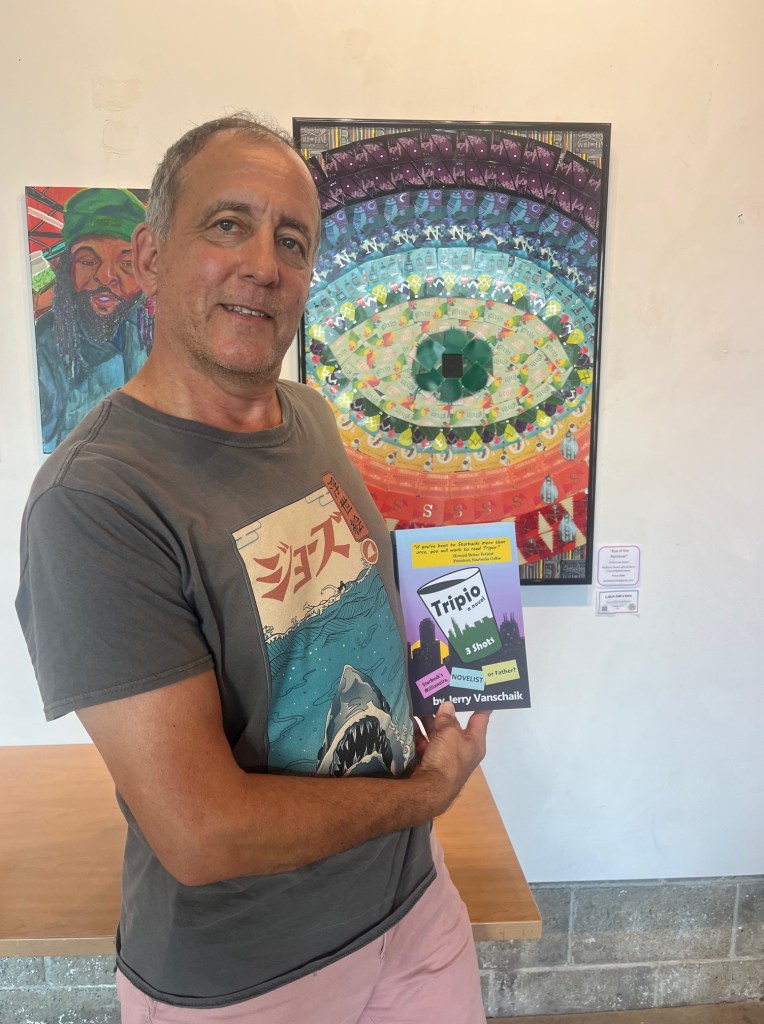
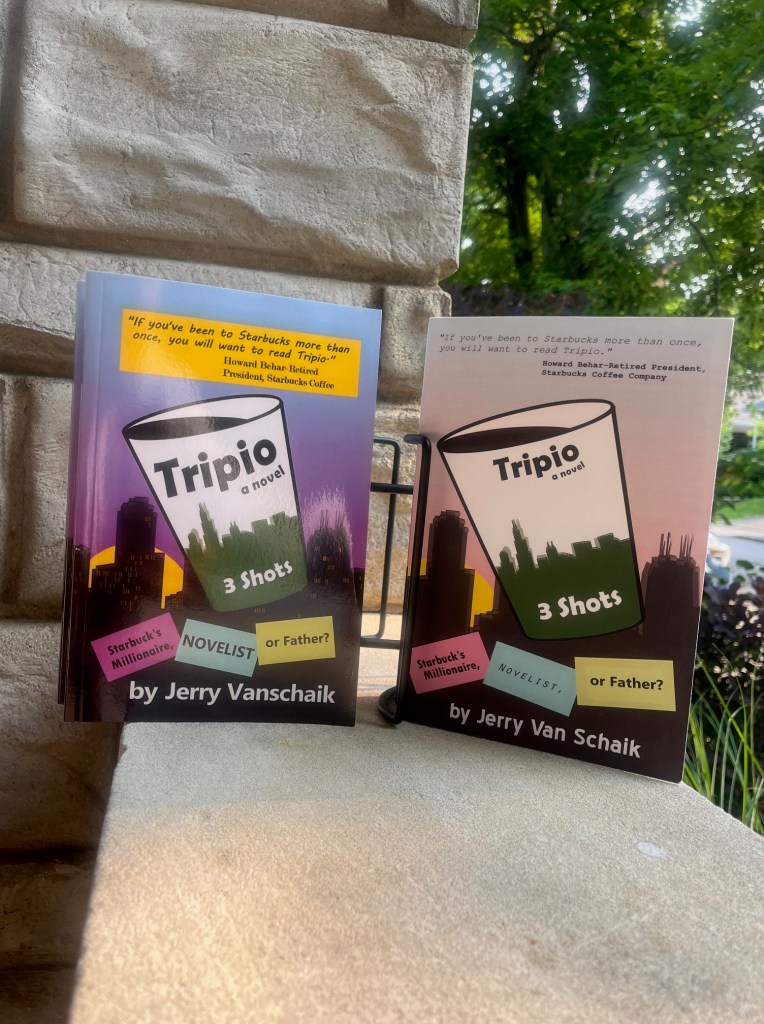
I was finally able to revise and upgrade the cover of my first novel, Tripio. It had been bugging me for years, like something your doctor would mention at your yearly check-up. Not life threatening, or even painful, but maybe you should do something about it. And so, the process never made it to the top of the pile of things I needed to do.
The term book industry folks would use to describe Tripio is a passion project. Fine. Tripio is a very personal novel. I like to say that I would have never published it if I knew what I was doing. Yes, the spelling of my name is correct, the title is legible, the graphics are clearer, the interior type larger and better, and there is formatted front and back matter. All of that helps. It may help even sell a book or two.
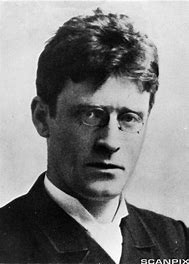
But I had to do the revamp mostly because it is my story told as openly and honestly as I could at the time. Sure, I like to compare Tripio to Knut Hamsum’s amazing novel, Hunger, one of my favorite books of all time. And Tripio does resemble the story of Hunger, a century later and moved to Chicago. Tripio captures a defining time in my life, and I wrote it at an equally defining time in my life. A double dose of me. Which is not a great way to sell a book, I’m sure. Nonetheless, Tripio is not the story of Starbucks, or Knut Hamsun, Howard Schultz or anyone else. It is me in those pages and that is why I had to make it better.
Once the upgrade was complete and accepted by Amazon, not as easy as it sounds, I felt relieved. It was done and I could see that it looked way, way better. Books are never done. Books, written and read, are energy between covers, revised and otherwise. One bit of energy still flowing from Tripio is what my life would be like if I stayed at Starbucks with my 264 shares of IPO stock options with its Current value of 1.23 million dollars.
Knut Hamsun
A few days after the revision I found myself pondering that question again on a long drive for my job. My five senses are always occupied with this bi-weekly nearly two-hour drive, so my mind is free to think. I must point out that my intention on most mornings before this and any other long drive is to “put the novel in my head”. I have some coffee at my laptop and write at least enough to let my mind work on the novel while I drive. Well, I’ve been on a writing sabbatical for close to a month, so I had no novel to put in my head. Or so I thought. As I said, no novel is ever finished. It can’t be. Energy has no end. The Tripio question was back although not in the same way. Why didn’t’ I stay at Starbucks and retire early and rich? Why?
I realized once again that I’ve mostly answered that Starbucks question mostly by writing Tripio. With that space in my mind now opened, I’ve put in some self-forgiveness for not being able to change the past and some understanding that your past is never the future when you create it in the present. If that makes sense. I have released that and lot more by writing Tripio. That is the value of the book to me. Not what is represented on a sales chart on Amazon or elsewhere. No one can see that when they look at the sales figures and they won’t see that in the reboot either.
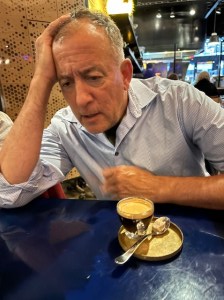
Howard, back in my day
That question settled, I still had windshield time to work on a second bit of energy regenerated by the Tripio reboot. In Hunger and Tripio, both protagonists want to make a living writing. Decades after living Tripio and nearly a decade after writing it, I am not making a living solely by writing. Not even close. The Alliance of Independent Authors estimates that there are about 3,000 folks in the US who make their living by writing alone. That is not many. I am sure none of them meant to, but that day they all pissed me off.
I like my job well enough. It is not what I dreamt of doing when I was growing up of course. I wanted to play second base for the Cincinnati Reds. But, I have nights and weekends off and the job doesn’t ask a lot of me. It doesn’t give me a lot back in return monetarily but my mind is free to write as I go through my day and my drives. But I can’t make my living my writing alone. There’s three thousand of you. What’s one more?
A few minutes into my first stop after my long drive I found the answer to the headline for this post when an employee of the long-term rehab facility I was servicing asked me about my job. She asked me what I did. I told her. Did I like it? I said I did. She asked me if my job was better than wipin’ ass. I replied that yes, it is.
Needless to say, I used that Tripio related energy to enjoy the drive back a lot more than the drive to that first stop. The gal in the pink scrubs hadn’t meant to, but she made my day. My job is better than wipin’ ass for a living. My tax return may not show it, and I may not be Stephen King, but my life is overflowing with blessings. I have a great life, filled with riches that will never, ever find their way onto sales charts or into bank accounts.
Shouldn’t you cover your ass and say you mean no offense to health care workers in long term care facilities? No. That would just make their job harder.
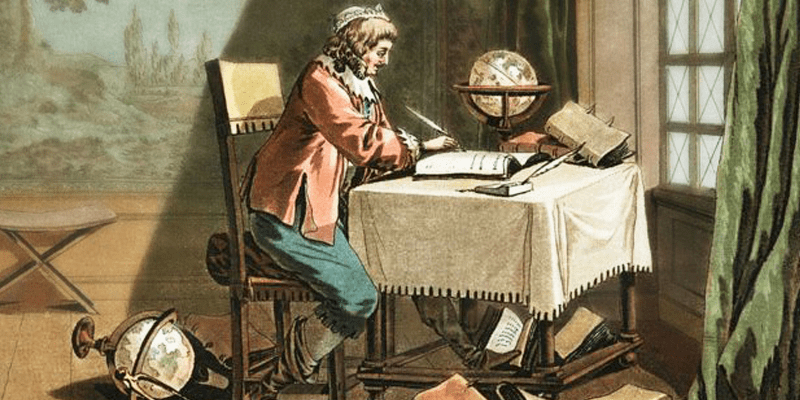
Some of us know Rene Descarte from the Latin cogito ergo sum.
All of us know Rene Descartes from the English I think therefore I am. That has been around so long that, as far as I can see, it no longer applies to our everyday life. In keeping with my revisions of other words of wisdom, I’ve updated Descartes to apply to the current, unrelenting, device-spawned commodification of our own, original thoughts:
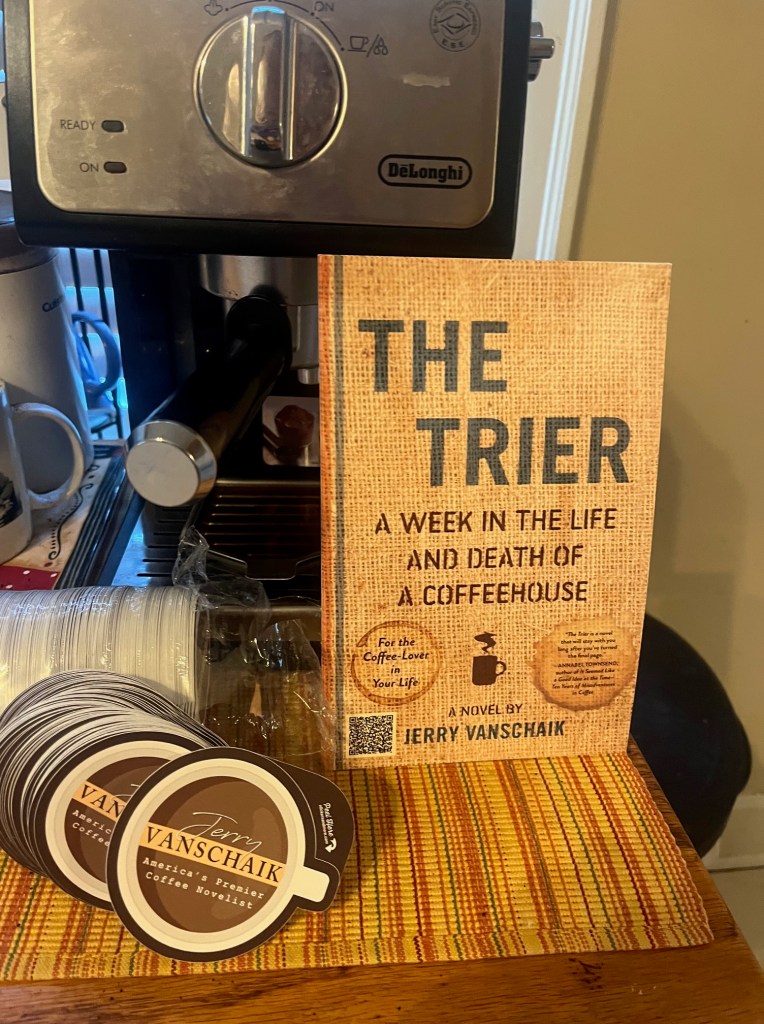
I am on a break from writing, having just finished The Travels of the Trier. I would even use the word sabbatical, since I wrote Travels on the heels of The Trier goes to London, after writing The Trier, revising Ironjaws, revising Back outta the World, and writing Tripio. Included in all those were edits, more revisions and more time at the keyboard than I could begin to count.
So, instead of writing for several hours on Sunday morning, I left the laptop with intent. I decided to go for a walk in the woods. To borrow a line that I read recently in The French Art of Not Giving a Sh*t, “Nature exists with no reasons or explanations.”
I asked for none and received none in return. It was just what I needed.
Captured with VisionCamera by mrousavyCaptured with VisionCamera by mrousavy
We had a great time Saturday at @tomorrowbookstore on Mass Avenue in Indianapolis launching my YA novella, Ironjaws. I want to thank everyone who made the trip to say hi and even to buy.
I’m writing this blog post mostly because I don’t have a book in my head at the moment. It has been a while. I remember after finished The Trier I told myself I would take a break before starting the next one. Not to be.
I made no deal with myself as I moved onto Trier book three, still holding onto the working title of The Trier Goes Many Places. I found out very early into the book revealing itself to me that that title was not going to work. Or maybe it does after all. Not sure. That will become clear at some point.
The title aside, I have found it really easy to keep the book out of my head. I reworked the end several times over a week or so. I was still working on it last week at this time, which is easy to remember because it was a Saturday morning, and I have more time to write than on a weekday morning. The end kept coming into my head until it didn’t, so I know it is done. It has stayed out of my head since, confirming that conclusion.
While writing part three of The Trier, I was surprised how little I referred back to part two. Less than a week later, I feel the same about book three. Did I really work on it day after day. Hours at a time. A line at a time. For about a year. Not sure when I started T-3 even, but I’m guessing last fall or late summer. Is it odd that all of it seems so distant now?
I do need to fluff and fold both Trier 2 and 3 at some point. Of course that will be done the first Trier having set the table.
After sitting on my porch just now considering it for a few minutes, as I watch it rain, I don’t think it is odd after all. And I think so because I view my writing practice like my yoga or meditation practice. You don’t take them into the next day. That is one of the benefits really. You don’t attach to or evaluate, but rather you allow the outcomes of your yoga or mediation to just be.
Same with my writing practice, I think. I left it all on the mat. And today is another day.
You must be logged in to post a comment.