Say that three times fast. Blink, think and click.
I just tried typing it three times fast and it didn’t work out once. Anyway, on with the show.
Have you heard the classic marketing joke? Even the best marketing only works 50% of the time. But nobody knows which 50%.
Click, blink and think
With that in mind, I have been reading and researching book marketing, book covers and so on. The main challenge for me is finding an audience, category, and genre. The overall wisdom from my reading and research is that one has go out there, find your potential readers and ask them what they like to read. And, even more importantly, find out exactly what they will spend their money on.
Luckily, I have found a wonderfully informative podcast hosted by Joanna Penn. She covers everything one could think of related to direct publishing, including marketing. And, in the most recent episode she talked with and guy who wrote “Fat Vampire”, which is now being turned into a series on Syfy. It was not an overnight success, but you can see from the title and word vampire, that it is so easy to find an audience, category, genre. I think if you wanted to find books on vampires, then putting the word vampire in a search engine would be a good start.
Think, blink and click
Sadly, my characters happen to be human. The thought did cross my mind of turning Jay in Tripio into a time traveling, kickboxing, preternatural creature who feeds on Starbucks baristas. It could even be topical. Starbucks corporate knows of the creature but does nothing. Thus, providing the baristas with incentive to unionize.
But serious folks, buy my book, please. For the youngsters reading, that’s a riff on the classic Henny Youngman joke.
I have read two books on the above topic-not Henny Youngman, on finding and getting to know your readers. One was quite predictably called, Book Relaunch. I found the book helpful. I will use a good deal of it, I am sure. I have even started on survey questions, set up a Mailchimp account and began to construct a marketing campaign in order to ask as many readers as possible exactly what they think want to spend their money on.
Then I read Malcom Gladwell’s, Blink. A mistake, I think. Because, in Blink, Malcom Gladwell goes into wonderful, readable detail that makes a great case that, when asked, people seldom know they want, what they would buy and why. The failure of New Coke is used as a test case. Buy New Coke, please.
So, I feel like I’m back to square one. If I do launch a marketing campaign to find my readers, will they even know what they want? So, the old marketing joke above probably does apply. Which gives me 500.5 chances to get it right this time. Because the next book I plan to read is 1,001 Ways to Market your Books.
How about, “Fangs of the Barista” or “The Caffeinated Count?”
Writing a novel is difficult, time consuming, mind consuming affair. It takes a lot of time just to find the best time for you to write, and even then, it may not go well. If you are a writer, you already know this. If not, this pretty much applies to any and all of life’s endeavors, “If only I had done this, or not done that.”
I am in the last, final, terminal, final and last rewrite of my metaphysical road novel,Back outta the World.The challenge for me on this project is presenting a main character to the readers who doesn’t know quite why he is on this road trip on he has found himself on. If Jay doesn’t know, why should the reader care? This struggle between where his mind is and where the body is going, must be interesting enough to keep the pages turning. So, I’ve had to be careful as the book goes along. It is hard to keep a character from himself yet show enough to keep the reader “in the book.”
If only I…
I found myself attempting to revise a critical line in the novel. The protagonist is about to declare his thoughts and reactions when suddenly being asked to go much further on the trip than expected. He had told a friend on page three his intentions. On page 12 he is asked again. I was stuck on the answer because Jay revealed too much of the answer. In other words, If Back outta the World was a murder mystery, then Jay would have revealed on page 12, “who done it“. So, I had to change is response. “If only Jay had not said that on page three.”
I went back to page three and did just that. I went back a day in the book, changed it, and it made the present work. Nice work if you can get it, right?
If only I…
If only we could do that in real life.
But I did capture what is great about writing a novel, or novella or short story. You can change an ” if only” in the past to make the present better! In the present moment of revising that line I was stuck, frustrated. In my example, I went page a few pages to clarify and reshape what my protagonist said about his trip back outta the world.
I did just that
That, in turn made my real-life present day enjoyable. Fixing an “if only” changed, cleared and energized my mind. I felt like I had achieved something positive, and unique to me. I could carry that energy with me the rest of the day, which is all we really get anyway. Yes, writing is hard but within it is contained the chance to fix the past. It is nice work, and I have it.
If it were that easy. Just like any piece of advice given away, it is given away for a reason. It is easy to say and not easy to do. If you have read this blog for the last year, you know that I have found it to be a challenge to do just that.
Find an editor. Simple to say. As I alluded to, easy to say, harder to hear. When I hear it, I translate it as “find someone to finish raising your children because so far you’ve sucked at it, buddy”.
The kinder, gentler me would advise instead to “Find the point in yourself when you know can’t do your work any good anymore.” Then find an editor. Simplified it, right?
How do you know it is time?
One hears a lot of wisdoms on how many times you should rewrite your work before turning it over to an editor. I’ve heard three the most. I have seen more than that more times more than I’ve seen it fewer times, most of the time. I am currently reading the “Book Relaunch” chapter on editing and their suggestion is “several”. So, how do you know?
I am sure I have completed three passes on my own for my metaphysical road trip novel, Back outta the World. I had not looked at it since last spring. In that time, I had somehow told myself that it was farther along than it was. Not sure how or why I came to that conclusion. Wishful thinking played a big part, I’m sure.
After reading the first page or two, I knew. It was not close to being ready to leave. I had no choice but to go back in full edit mode. The first couple paragraphs told me that my memory was faulty. I had not changed narrative voice in some spots. There was way too much showing and not enough telling. This child still needed me.
Your time has come
The reason I had been excited to get back to ‘Back outta the World‘ in the first place was that I have recently finished a shorter work, Ironjaws. Ironjaws is awaiting editing by a professional at the end of this month.
I can do no more for Ironjaws. It has resisted attempts to be a novel. It has evolved, changed, gained gravitas and even developed a sense of humor. I love it of course, but that’s what I’m supposed to do and how I’m supposed to feel about it.
But how to know it’s done? How to be sure it is ready for an editor? How to know when to stop writing and self – editing? How to know this child will not move back into his/her old room? The most decisive way is to experience what I did- realize that I have had NO urge to go back and tinker with it. None. No separation anxiety, if you will. My Ironjaws file has been sitting at this very keyboard, at my fingertips and been ignored for about a month now.
We both know it is time
It is the same with parenting. If you sacrifice your own time, truly give of yourself while raising your kids, then they are secure enough in themselves that when they are ready to leave, you know you’ve done your best. They know they are ready. You say something like, ‘Call if you need anything” but you both no they won’t. If your story or book hasn’t called to you for help, then off it goes. It is telling you it is ready, and who would know better??
If you don’t have older kids who have left the house, then still try listening to your story or novel. Put it away for a time and see if it calls to you. It’s your story and unique to you. You will know.
A few days ago, I was texting my brother. My daughter was watching me and commented, only partially joking, that she was “horrified” at how slowly I texted.
Yesterday, I finished writing my novella, Ironjaws. Please don’t tell my daughter this, but I started it 34 years ago.
It was not a case of writer’s block, procrastination, lack of ideas or problems with execution that prevented me from completing Ironjaws. The same applied to the text I was sending to my brother from my living room. In the case of the text, I replied, without looking up from my index finger only texting, that “He won’t be able to tell how long it took me when he reads it.”
I remembered that throw away comment just this morning. I didn’t really think about it when I said it, only recall being mildly irritated. Out of the mouths of one fingered texters come great truths. Which begets the question, why this obsession with speed, quickness, instant gratification & convenience? I’d like to answer that for you, but don’t have the time right now.
But I do have time to tell you that I started Ironjaws on Maynard Drive in Columbus, Ohio in the summer of 1988 or thereabouts. I was living in a double, with a tiny third back bedroom upstairs. It was only called a bedroom by the landlord so he could charge more to rent the place. It could have held a bed and possibly a tiny nightstand but not much more. I bought a secondhand desk and chair and turned it into my workspace. During that summer, I opened the window which looked out on the alley and the parking spaces for the double. There, without AC, I hacked out Ironjaws on a typewriter. Onto paper. One finger at a time.
Have you got 34 years?
The one finger at a time bit isn’t true, but the rest of it is. Written into paper or onto a laptop, the intent with Ironjaws was to write it, not finish it. I know I say 34 years to write it. It is more accurate to say that I was in my twenties when I started it, and in my fifties when I finished it. The intent. That is what really matters. Good luck measuring that. A quick text and novella are two very different things of course. Made more different if one is measuring each by using the amount of time needed to complete them. But, for me, they were way more similar than different in one way: I fulfilled my intent on both.
When I started writingIronjaws, I was just a little more than a decade removed from the ages of the five main characters in the novella. The five are a basketball team who are just about ready to enter the 8th grade. They are on a fishing trip together on the last weekend of summer. A couple hours into the evening on the lake a stranger tells them about a legendary catfish named Ironjaws, who lives in the farther away, deep end of the lake. The five decide to head out into the night and try to catch the giant fish.
But there is so much more to Ironjaws than that. I figure it took me about 48 hours to physically write it and rewrite it with lots of life happening in between versions. I couldn’t finish it mostly though, because it wasn’t done. The story was waiting on me, in other words.
Buried in Ironjaws is the fate and futures of those five young men. Are they fated to be like their working-class fathers? Not a bad thing at all. But in the novella, Ironjaws is a metaphor for their hopes and dreams. Any and all dreams are still there in middle school. Or are they? Is it just a fisherman’s tale?
How long does intent last?
Ironjaws always contained a sense of romantic loss and wistfulness, of what might have been. The boy’s futures were never going to be playing shortstop for the Reds, driving at the Indy 500, or becoming the Hugh Hefner of the secondary auto parts industry. Back in my twenties in Columbus, Ohio I only suspected that, but now I know that, thanks partially to Facebook. I do know what did happened to those five 8th graders. I know now what I thought I knew when I started Ironjaws. And I put that into Ironjaws, more fully this last revision. Thus, making it the story it had waited 34 years to become. The intention was finally fulfilled, thanks mostly to the time it took.
Oh yea, you may be wondering what the text to my brother was? – “Almost done with Ironjaws, already thinking of starting the sequel.”
“What can we gain by sailing to the moon if we are not able to cross the abyss that separates us from ourselves?”
– Thomas Merton
It has been a while since I posted. I feel like I need to explain myself, so I will. I did, with intent, step away from posting for a month. As anyone who’s begun work on post number two will tell you, creating these things ain’t easy. I needed a break from the grind of a weekly post. Mostly though I needed to free up and direct my mental energy elsewhere.
I have at long last begun working with an editor for Ironjaws and have found a cover artist to re-design the cover of Tripio.
The search for an editor took a while. The vast majority of us are doing this by the seat of our pant and alone. I mean that no one has been pounding on my front door asking to help me on my next novel. No one is texting me offering to reboot Tripio‘s cover. I have never logged into WordPress and found that someone has ghostwritten a post for me. To make matters worse, the distance from my couch to this chair where I write had become a long, treacherous and terrifying abyss of several feet.
Then there is that irritating work week. It gets in the way too. Plus, there’s eating and sleeping and feeding the cat. I am not making excuses here. Just establishing that we are most likely in this same boat when it comes to making time for everything we have to do along the way. Which includes getting to things that do matter to us. One doesn’t’ have to be blogger or writer to know this. It’s daily life.
I have been unhappy with the cover of Tripio for at least a year now.
I have wanted to get another, second book on Amazon for almost a year now.
During that vaguely described period of time, it must be noted, I did have a couple knocks on my door. For a brief moment as I stepped towards the door each time, I felt sure it was someone from a Big Five publishing company dropping by. But no. Once it was a Spectrum guy. That other time it was a guy handing out religious pamphlets (not Merton, btw).
It took a little more time (that word again) before I gave up hope. I have finally taken action. Over the last week, I have started, as I mentioned above, working with folks who will help me accomplish things that matter to me. I had an hour Zoom meeting covering the cover on Wednesday. I submitted a 1633-word except from Ironjawson Tuesday. The cover is a way off still and I have no clear idea what it will look like. I am not sure what the editor to be will think of Ironjaws. But way before the process is complete on both, I know I have made the right choices for both.
Is this guy nuts? How can you know you like the car if you haven’t even driven it? How can you know you’ll like the new vanity in the bathroom until it’s installed?
Easy. Conclusions like these are simply a result of how well we know ourselves. Can and will a new blue car make me happier than the green one? Can and will a bathroom vanity that opens to the right make me happier than one that opens to the left? No. Of course, they can’t.
Will an editor destroy Ironjaws. No, they don’t’ have the power to. Will the new cover of Tripio ruin my day when I see it? No, I won’t allow it to. In short, this world isn’t about me. I feel like I have an obligation to adjust to it, to give it some of me, and not take from it what I want. Sounds crazy but it has a way of clarifying the decision-making process.
And -Yes, I did have good reasons for not being able to get to these two important projects. But I think there was an element of fear there too. Fear of what would happen, of what would people think. These fears took the form of resistance to undertaking the projects. That form, in turn, manifested itself as me on the couch watching college football’s “Bowl Mania”. I’m not saying it happened overnight, there were 38 Bowl Games to get through, but once I let go of those “what if” fears, the abyss from couch to chair seemed like just a couple steps once again.
Starbucks today and the Starbucks I worked at in Chicago and set my historical fiction novel Tripioin, would have a hard time recognizing each other. For one, there are about 25,000 more stores and 200,000 more employees around than when I wore the green apron. Those numbers tell the story in the way only numbers can. I thought I would confirm them and at the same time illustrate the change of culture in a different and hopefully humorous way.
So, as I read From Barista to Boardroom, I highlighted ten phrases that were found in Barista and used by some of those 200,000. Barista was published inn 2021 and covered Starbucks growth over the past 25 years. I then took the list and asked the protagonist of my novel, Jay, who is still in 1992, to see what he thought they meant to him his crew of a dozen or so at his store on the corners of Diversey, Clark and Broadway…let’s listen…
The answers from someone who should know
“Jay, would you describe what the following ten terms mean to you and the crew at store #204?
1-“Customer service piece” – “That happens when the doors open.”
2-“Promoted to customer”- “Remembering the customers names, jobs and family members.”
3- “Implementing a new customer relationship management system”- Deciding who’s going to be on the espresso bar at rush time.”
4 -“Project deliverables’- ” Making sure there we’ve ground enough drip coffee ground for the next day’s rush.”
5- “Mentoring relationship’- “Explaining to a customer that Starbucks has nothing to do with that skater, that the logo is not a mermaid, that Starbucks is not a franchise.”
6-“Highly matrixed organization” – “When everyone in the line of customers is all asking the barista, “Is this one mine?”
7-“Brainstorming sessions” – “Where are we going after close tonight?”
8-“Mindshare” – “Knowing the regular customers drinks so well that you start on them before they order.”
9-“Transformation Agenda’- “The weekly schedule.”
10- Partner Resource Director – “Whichever manager counts and divides the tips.
“It felt like the circle had softly closed, like it was all meant to happen exactly that way. I could now let go and move forward, embracing life as a former partner.’
These couple of sentences conclude Christne McHugh’s’ memoir, From Barista to Boardroom. In my historical fiction “Starbucks novel” Tripio, Jay (me) leaves a once promising career at a lit fuse of that small coffee company at the around the same time McHugh’s career is taking off. Christine’s memoir is a detailed and revealing look at the 27-year career she had at Starbucks. Reading her memoir, for me, was a look back at the career I didn’t have.
I am personally grateful to have read it, to experienced it vicariously because I could not have done what she did. My mind has used some considerable mental energy over the years wondering “what if I stayed at Starbucks and pursued a career there?’ I have taken numerous mental reveries thinking how much better (who imagines it worse?) my life would have been if I stayed at Starbucks, held onto my IPO shares etc. I have written numerous posts, hey- even a novel, all of which to some degree kept that mental “circle from closing.” Now, it is closed, and I have Barista to Boardroom to thank for it.
When I say career, I define it in terms of Chrisine’s world of corporate machinations, promotions and politics. And of agonizing decisions to move a family for a chance to further your career, of even more agonizing calls to partners to lay them off, of Starbucks employee (partners) mentorships, demotions and disappearances.
The day the Frappuccino was born
I cannot offer thoughts on that world. Christine has done that. But what I can do is acknowledge that I was NOT cut out for it. How many people are? I just wanted to steam milk for 20 more years and watch my 268-stock options split. Split and steam. Steam and split. That was my hope, my goal, my intention. I felt that world coming on, even as early as 1992. In fact, I like to pinpoint the date exactly as June 23, 1992. The date of the Starbucks IPO. Or, as I refer to it as the day “the Frappuccino was born“. The end of the vibrant, regional coffee company which to this day was the best workplace I’ve been a part of, and the birth of the global, corporate behemoth that Christine plunges us into in Barista.
A tale of two baristas
Christine started as a barista about a year before I did and, unlike Jay in Tripio, pretty much kicked ass for the next 27 years. She describes many meetings, deadlines, initiatives, reorgs which many, if not most of her intended readers will recognize and response to with- “I’ve been there” or “I was in that meeting.” I read these sections of corporate workplace life and finding myself saying “No way I could have done that.”
So, for about 99% percent of the book, I could not identify with Mchugh’s experiences. But, in the 1% of the time that I could, explains why it was, and has, been so hard to let go of my 4 years as a Starbucks partner. In that 1% I found the empathy and comradery and unity that being a Starbucks partner brings, apparently forever. I was rooting for the Alaska native who started as a 19 old barista, whose favorite coffee was Verona.
As that emotional partner, I was most upset when I read the part in which Christine was more or less abducted and demoted while very pregnant. (I’m being dramatic here, but part of this post’s intent is to generate interest in the book). I thought to myself that no business enterprise is worth treating one human being like that one time- ever. How can that be worth it, justified? Yet, she overcame that and carried on in her career.
There are many more wisdoms related from her career that are found in Barista which will serve those interested in career crafting. Read Tripio if you want a lesson in career detouring, by the way.
A benefit for life
Back to the 1% part. I could relate to and was mostmoved when I read of Chrisine’s determination to keep her “mark-out”. The last time I heard that term I was wearing my green apron. My weekly mark-out of the best coffee I’ve ever had, was priceless to me!! For the duration of my 4 years at Starbucks, I may have missed taking this small but glorious benefit only a handful of times. In fact, I would often come to know which baristas didn’t drink coffee and would relinquish their mark out and ask if I could have theirs for the week.
Found in that example which so spoke to me, are the traits that were perhaps McHugh’s most valuable on her path from Barista to Boardroom. I saw her willingness to try something new and to persevere until it was done. I found her effort to keep receiving her favorite coffee to be an unintentional tribute and nod to the baristas like me, and Mark and Denis and Sarah and many, many others who worked hard at Starbucks back when it was a regional coffee company. The company that attached encircled me a long time ago.
Another circle closed
Lastly, a bit more about me. I realize that it is merely a self-told and often believed fantasy that I could have stayed at Starbucks for 20 years. And spent those years merely steaming milk and splitting stock options. Over the years that fantasy has appeared less and less in my “if only” mind. Luckly, I have, in real life, found my fortune, the one hinted in the epilogue of Tripio. Thanks to reading Barista I was able to at long last, softly close that circle, imaginary though it was.
This post’s first bud of spring appears way back when I first began contemplating direct-publishing Tripio. To be clear, the idea of publishing Tripio came way after the origin thought of writing it. And way, way, way after I kept the journal entries that became the novel, Tripio. Just two (repost disclaimer : 3 years) ago, I did not have a blog, shop Amazon for books and only used Facebook to keep track of my kids. Just to be clear and for context and perspective (however unpopular those are these days), Tripio’s direction was always inward.
As for the two, sorry, 3 years ago, that is when I found myself taking a class at the Indiana Writer’s Center, called Publish your Memoir. Since then the information and advice available on and around publishing Tripio has been staggering. A tactic for dealing with all that information, advice and insider know how is to let most of it pass by you. What you need will come back to you over and over. One item that kept coming back to the top of the pile was the selection of the right category for Tripio. Here is where I feel it is important to refer back to the prehistory of Tripio. If I would have known it was so important, I could have written Tripio with a category in mind and directed it’s plot, characters, it’s very soul, into the correct and ultimately profitable category.
Ah.
Hell.
No.
Plant your book in a category
In order to sell on Amazon at all, a book needs a niche, a genre, a category. The category is your book’s sacred ground as far as Amazon is concerned. Plant your book in the correct category and in just a few weeks a dispatcher at Brinks will call you and set at time for the truck pull into your driveway with money to unload.
I realized the importance of it all, but finding a category for Tripio came and went on the priority pile. I think one reason I couldn’t get closure on this was that there is no simple answer. As you may know, Tripio has three distinct but collaborative story lines so it is a hard novel to grab hold of and define. To me, this a sign of something special and unique. To Amazon, that is a problem. Since I “had” to choose, I placed Tripio in the “historical fiction” category.
Replant it if you have to
That just didn’t feel right. I felt like I had picked a major going into college just to keep my parents happy. That choice was made over a year ago. Life went on. But for the past several months, sales have stagnated, which may or not have anything to do with category choice, but one never really knows. It was enough motivation, however, for me to find myself contemplating the right category for Tripio yet again. Category choice had once again found itself near the top of the pile of things to do.
Which brings me to yesterday. For the better part of an hour I considered a category for Tripio as I drove to Elwood, Indiana. All options were in my mind. Was Tripio a romance? Literary fiction? Maybe contemporary historical fiction? I was back to the same thing that had kept me from settling on a category in the first place. In and around those thoughts was the hope there would be coffee shop somewhere in this small town. I love that type of coffee shop. They are usually found in an old bank or pharmacy. They are roomy but carry a sense of gravitas and history, not of transaction. I asked an Elwood local to point me to such a place and soon enough I found myself at the Gypsy Soul.
The gypsy soul is indeed a coffee house. I chose a cappuccino for the ride back from Elwood. But the Gypsy Soul is also part a salon and another part boutique. A “women’s dream” the barista told me as she steamed away at the milk. The cappuccino she made was quite good. I almost bought some hand cream. I regretted that I didn’t have time for manicure.
Water your category
As I drove home later, I was thinking of the Gypsy Soul. It would make a great coffee shop on it’s own with it’s high ceilings, long wooden bar, and view of Elwood’s old streets. The other elements were there but, for me, Gypsy Soul was a coffee house. My next thought was that, at it’s core, Tripio is a coffee book with a coffee title, which mean it belongs in a coffee category, right?
In order to stand out yet at the same time feel “right” to me, Tripio belonged in a coffee category. I already knew there was a coffee category but it was for the business end of things, or for making mochas at home. I took my visit to the Gypsy Soul as a sign of good fortune however. If you can’t believe a Gypsy fortune, who are you going to believe? I decided that I would dig deeper into the category selection on Amazon when I made it home.
Put it in the sun
The Gypsy was right. She told me to keep searching and I would be rewarded. There was a category on Amazon called Coffee Shop Fiction! This is where Tripio belongs. Such a relief. This is a category that would also work for Back outta the World and Altonstreet & Philpatrick, both of which take place in and around actual coffee shops, ( Brazilia in Columbus, Ohio and Oregon Street Coffee House in Dayton respectively).
I can rest easy now. The category was not large which also means Tripio will be easy to find among Grounds for Murder and Bikini Baristas. This gives me hope that I will one day “own” the coffee shop fiction category. I can finally cross the category search off my list. I can now tune out the background noise in my head that had been buzzing around for over a year. This means that I can spend more of my valuable time actually writing. Time to get started! But not before I order my copy of Bikini Baristas.
I keep doing things backwards. Oh well.
I chose to update this post for a practical reason. Firstly, I hope this post does help your book find a category. Secondly, as I rework Altonstreet and Philpatrick it occurs to me that I do in fact have a “Coffee Trilogy” on my hands. A & P is now going to take place over two day – entirely in pre-Starbucks era coffee house. And, if all goes well, Altonstreet & Philpatrick will join Back outta the World in the Coffee Shop Fiction category.
WE SUFFER MORE IN THE IMAGINATION THAN WE DO IN REALITY
-Seneca
Sure, but he didn’t live in my neighborhood. Actually my neighborhood rocks. It is a throwback to before the time when houses were built around garages that swallow up neighbors. Neighbors that I have experienced take your kids to school in a pinch, loan you a lawn mower, sit on your front porch and shoot the breeze, give you tomatoes, walk with you and overall look after each other from a close distance. Before I go on with the meat of this post, I believe the end of civility began when the homes stopped having front porches. We now know our neighbors cars, not our human neighbors. Mull that over your local Starbucks on a rainy Sunday afternoon.
I was suffering in the middle of the night
It was with trepidation and a little fear that I headed off my porch, coffee in hand, back to my grass alley where I made a left (the opposite direction of the all of my known neighbors) in an effort to discover the source of the noise that kept me awake on and off all last night….
I work the night shift
It was around three last night, when one should be asleep, that I was woken by an odd humming noise. I had gleefully anticipated this particular night of slumber for days. It was predicted that the temps would be cool enough to open the windows. They had. I sleep much better with the windows open, as the choir of bug sounds and soft evening breeze soothe me into slumber. On top of that, I had taken a short evening walk. In addition I practiced my “restore, release and relax” yoga asanas on the front porch about an hour before bedtime. It was Friday and even though I would not be sleeping in, I knew that I would sleep deeply. That created anticipation of a pot of Crimson Cup’s Sumatra Mandheling to accompany a morning of writing which would produce not just content, but, surely, genius.
Then comes the odd humming noise coming my windows. It had to be originating from one of he two rentals on that end of my solid, working class, tree lined street. It is not uncommon in big cities in the U.S. to have stable neighborhoods populated by a couple houses that are occupied as nearly as quickly as they are vacated. Life in the big city. If the noise had originated from any of the half dozen known neighbors who I have in my phone and even trade house keys with, I could have texted the problem away.
I begin to suffer in my imagination
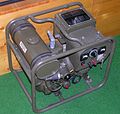
No such luck. As I lay awake, fully awake now, and listening, I knew that it had to be a motor of some kind. OK. Not a car motor but a generator or compressor of some kind. It was not as loud as said car motor, so I figured I could fall back to sleep to it’s compressing or generating. Right. It will have to stop generating or compressing soon. I redirected my thoughts for a time to a metaphysical exercise of visualizing a candle flame- a lot less taxing than counting sheep. I next tried some yoga breathing, letting the mattress of my bed rise up to meet my limbs and torso. That did not work. The compressing did not stop compressing. The generator did stop generating. I could not reclaim my sleep. A thought locomotive made a stop in my head:
I kick the suffering into high gear
“What if it is like this Sunday night before work? Or even tomorrow night. I have yoga tomorrow. I’ll be tired and that will be a mess. What if I stop doing yoga. My writing will go down the drain. I’ll be tired at work all the time. My job, home and all that I worked for are in jeopardy. I can creep under the cover of darkness to the power source of the generator and unplug it, damned the consequences. A bit of a stretch. I’ll call the police. But it’s not a 911 type call. Can’t someone else hear it and do something? Why me? If I can’t sleep then tomorrow will be waste. My productive Saturday gone. Whole weekend will be shot to hell. And my life disrupted forever…
Or, I could take my very real fears into the next room, empty for now, where the windows were open but facing away from the compressing generator, and fall back asleep. Which I did. Luckily for you, however, this is not the end of the story.
I make a decision
We resume the next morning with me holding my cup of coffee, the aforementioned Sumatra, and headed towards where I suspected the noise to originate. Still in my slippers and sleepwear, I walked out of my back yard and headed toward the unknown: the end of the grass alley, the other side of the tracks as far as my immediate neighborhood was concerned. It was a generator. I saw the extension cord leading from a small mobile home through a fence surrounding a beat up house at the end the grass alley. The yard and that section of the grass alley had the look of a parking lot of a Walmart that had just exploded. There was crap everywhere: a wooden pallet, plastic chairs, soggy cardboard boxes, several lawn mowers and shapes of things wood and plastic that were once recognizable, useful.
Writing this now, I am struck that I had so little fear of walking into an unknown, potentially confrontational or volatile situation with a stranger. I noticed movement over the fence. There someone moving around in the yard behind the beat up wood slat fence. I could only see him from the forehead up to his curly reddish hair. This forehead topped with reddish hair held my life in it’s hands. I looked again at the extension cord that powered the generator, which led from the small trailer to the yard in which he was working. I stepped closer, holding my coffee cup, inhaled, and began. “Excuse me, I...”
I suffer no longer
In a few moments it was all over. Not a shouting match, not the call to the police, just a quick conversation. From the forehead with the curly reddish hair on down, the man was quite reasonable. He summarized his situation by the following “Been evicted, have to be out of here by Wednesday.“
As for he moral of the story? Don’t believe the worst you think of your writing, painting, scrap booking, deviled-eggs or your life as a whole. None of the the worst case situations that I convinced myself were very real outcomes, are now going to come to pass. In this blog, I blather on about the power and wonder of the mind. We are our thoughts. But with observation and some slightly courageous action, we can tell some of those thoughts to take a hike. Or in my case, a short walk in your jammies. Ultimately, one must walk down the grass alley to the source of our fears. Then we need to call them out. You’ll sleep a whole lot better.
Re-Post disclaimer
By the way, this is a repost. It is relevant to me because I have to practice what I preach. I am taking a class at the Indiana Writer’s Center on “Revising your work”. It is required that you submit and then discuss live on Zoom a 1,000 work expert from one of your works. Let the suffering begin….or not.










 Coffee Novelist
You must be logged in to post a comment.